Friday, November 6, 2015

Frugal Feasting Friday: $1.04 Per Person

Great tasting, 5 easy steps, one dish, low fat, less than 30 minutes and only $1.04 per person.  That's a perfect combination for a Frugal Feasting Friday recipe.  And to make it even better, for those with gluten restrictions, it's gluten free!

Beef with Broccoli Stir Fry


Step 1

3 c. water
1 1/2 c. uncooked rice

Bring water to a boil.  Add rice, cover and simmer on low until rice has absorbed all water.
Meanwhile, continue with steps 2 - 5.

Step 2

2 Tbsp. cornstarch
2 Tbsp. water
1 tsp. minced garlic OR 1/2 tsp. garlic powder
1 lb. beef steak, cut into thin strips (this is a perfect recipe for less expensive cuts of beef)
salt & pepper to taste

Sprinkle steak strips with salt and pepper.  Mix cornstarch, water and garlic into a slurry, pour over steak strips and toss to coat.

Step 3

2 Tbsp. cooking oil

Heat oil n a large skillet or wok over medium-high heat.  When oil is screaming hot stir-fry beef until beef is no longer pink.  Remove from pan with a slotted spoon and tent with foil to keep warm.

Step 4

1 head broccoli, cut into florets and 1 in. pieces OR 1 lb. frozen broccoli, cut into 1 in. pieces.
1 onion, cut into 1 in. chunks

Stir-fry broccoli and onion in remaining oil for 4-5 minutes.  Return beef to pan.

Step 5

1/3 c. soy sauce
2 Tbsp. brown sugar
1 tsp. grated fresh ginger OR 1 tsp. ground dried ginger
1/4 tsp. red pepper flakes
1 Tbsp. cornstarch
1/2 c. water

Stir together soy sauce, brown sugar, ginger, red pepper flakes, cornstarch and water until mixed well.  Add to the vegetables and beef.  Cook and stir until sauce is thickened, about 2 minutes.  Serve over hot cooked rice.

Serves 6

Prep Tip:  To get the beef strips extra thin, use a sharp knife to cut the meat while it is slightly frozen.

Cost Breakdown:

Beef Steak:  $4.29 (inexpensive cut of beef purchased on sale)
Onion:  $0.00 from our garden
Broccoli:  $0.00 from our garden
Rice:  $1.19
Condiments/Seasonings:  $0.75

TOTAL = $6.23 OR $1.04 per person
(Store bought broccoli and onion increases the cost to only $7.95 OR $1.33 per person)

Wednesday, October 28, 2015

Life Interupted

Sixteen days ago, about an hour after I'd gone to bed, I received a phone call from one of my sisters-in-law notifying my that she was at the hospital with my dad.  He had suffered a stroke.  He could not talk and was not capable of maintaining his balance while standing.  Fortunately, Dad was visiting a friend's home when the stroke occurred.  They immediately recognized the stroke symptoms and were able to get him to a medical facility where treatment could be administered quickly.  Three days later, Dad walked out of the hospital fully recovered without any permanent disabilities.

Upon the news and after a short conversation with the attending physician, Mr.B and I immediately began taking action to leave and drive the 650 miles to Missoula.  We had to turn all our stock out to pasture, top off all the water troughs, overfill the dog, chicken and rabbit feeders and pack.  We left for Missoula at 12:30 AM and arrived at the hospital by 9:15 AM.  By the time we arrived Dad had made significant progress in his recovery.

Mr.B and the littles left Dad's 2 days after his release from the hospital.  I stayed an additional week to make sure Dad was confident he could be on his own again as there are a few challenges living his chosen lifestyle.  Dad lives off-grid in a log cabin located on the side of a mountain.  His off-grid lifestyle does not include solar panels or a wind generator.  He uses kerosene lamps, a wood cook stove and a gravity fed water system.  At 70 years old he does have a gasoline powered generator for various power tools and recently purchased a log spliter.  So, when at Dad's this Farm Wife becomes Pioneer Woman.

Needless to say, this interruption has put me significantly behind on my autumn chores.  While gone a frost eliminated the remaining produce I was trying to eek out of the garden.  I still have 75% of garden clean up to finish.  I still have a mountain of compost to spread in the garden.  We are currently 9 days and counting behind on breeding.  We are also behind on getting our weathers to market ... and the list goes on and on.

Upon my return home, I found a new addition on our farm ...


Our leghorn hen, I call her Henny Penny, refuses to live in the the hen house or coop.  She is constantly escaping and free-ranging.  We've yet to find her nest or clutch of eggs.  It appears that she recently returned to the coop and became fertilized.  She's hatched a little chick and it is so cute.  I enjoy watching it follow her everywhere.  We usually hatch our eggs in an incubator so, this is a treat for us.

I will be making another trip out to Dad's in a few weeks to check in on him and help out where he may need an extra hand.  In the interim two of my three brothers will have turns checking in on him.  I' m thankful the Lord answered our prayers and he has recovered.

Tuesday, October 6, 2015

Vine Peach = Melon Jam

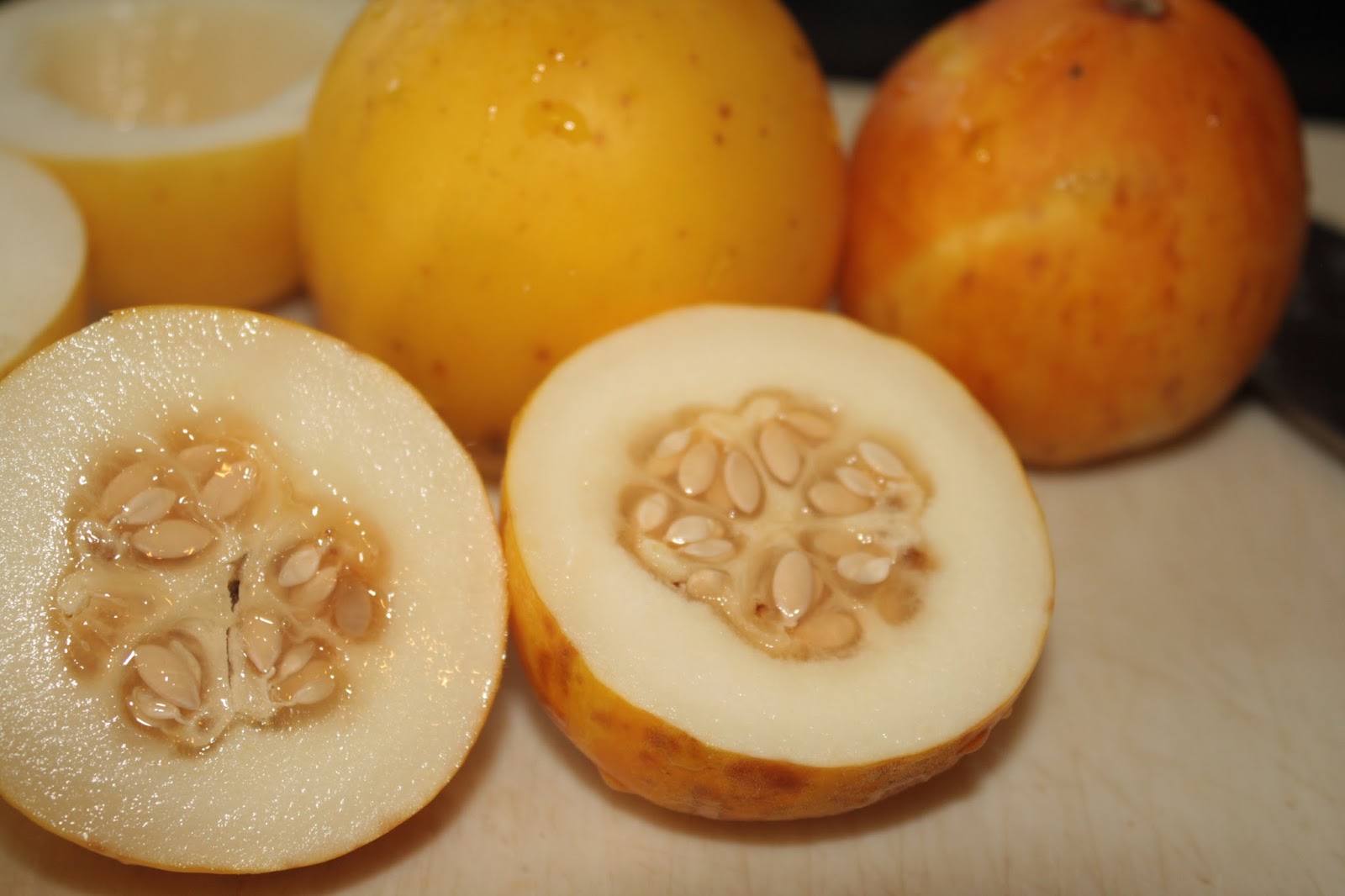
This past spring I received a free packet of vine peach (aka mango melon) seeds in my fruit and vegetable seed order.  I had never heard of a vine peach but summarized from its name that it was a vine type plant and produced some sort of fruit.  Therefore, I chose to plant it next to our cantaloupe and watermelon vines and waited to see what happened.  The vines grew heartily and produced these wonderful peach fuzz covered, softball sized, fruits that taste similar to an unsweetened, mild honeydew melon.  


After a bit of research, it turns out vine peaches are a drought tolerant, annual, heirloom fruit introduced to the early American settlers by the Native Americans.  According to the internet they taste similar to a mango, hence their pseudonym, mango melon.  However, as mentioned above, my taste buds convey they are more inline with an unsweetened honeydew melon.  Our family likes them raw, but according to my research it is said the flavor excels when canned in preserves, conserves, pickles or cooked in pies.  I can say from personal experimentation, when combined with cantaloupe and made into a jam, they are super stars.

We also harvested a bumper crop of cantaloupe this year.  Prompting me to turn to the internet and my vintage canning recipe books to figure out what to do with an abundant harvest of vine peaches and cantaloupe.  I decided to experiment and took a little of this and a little of that from various recipes and ended up with (drum roll) ...

TA DA!  Melon Jam!


This jam is a huge hit with my family.  If you find yourself harvesting more vine peaches and / or cantaloupe than you can, or want, to eat, try my recipe.

Mrs.B's Melon Jam
(recipe may be halved)

10 c. pureed cantaloupe OR 3 c. pureed vine peach & 7 c. pureed cantaloupe
4 c. pureed apricots
2  20 oz. cans crushed pineapple
2 oranges, zest and juice
12 c. sugar
1 tsp. ground nutmeg
1/2 tsp. salt

1.  Combine all ingredients in a LARGE stock pot and bring to a boil, stirring frequently to prevent sticking.
2.  Reduce heat to a hard simmer, and cook, stirring frequently, for 2-3 hours until mixture is thickened and reduced by 1/3.
3.  Ladle hot jam into hot sterilized jelly jars, affixing bands and lids as you go.
4.  Process in a boiling water bath for 20 minutes.

Makes about 20 1/2 pints.

Note:  Dehydrated apricots need to be re-hydrated prior to pureeing and measuring, add about 1/3 of the re-hydrating liquid when pureeing.  If using canned apricots, use all the canned liquid when pureeing.  Fresh apricots will not require any additional liquid during the pureeing process.


Tuesday, September 29, 2015

Nothing Goes to Waste

I don't think anything teaches one the art of recycling as well as living on a homestead.  We do not have access to the trash pick up, recycling bins, or curb-side free-cycling conveniences our urban counterparts seemingly take for granted.  I certainly took these for granted when I lived in an urban setting.  Since moving to the country we've had to expand our recycling skills.  This expansion of skills has overflowed into the garden and the barns.

Now that autumn has set in, our peas, cucumbers, spinach, lettuces, green beans,corn and melons have finished producing.   Our tomatoes, peppers, and squashes are only a week or two away from being finished.  Many urban gardeners will turn the spent foliage into the soil where it will breakdown and "feed" next year's production.  However, out here on the farm we have a better solution.


We pull it up and place it in our wagon or tractor bucket and haul all the spent foliage out to the pasture for the goats and horses.  As our pasture grasses dry out and turn brown in the autumn, this is a wonderful and perfect tasty green for the stock that now have to search for green foliage before our long winter sets in.


You may wonder if my livestock are eating the spent foliage from the garden, how then will I feed my garden soil?  No, I will not use chemical fertilizers.  Each spring when the stock is turned out to pasture, we must clean all the winter bedding out of the barn and we clean the hen house every spring and autumn.   Hmm. what does one do with a ton of manure filled straw and hay?  Recycle it, of course!  I like to call this old bedding garden caviar.  What I don't use for moisture / weed barrier between my garden rows during the summer is stored in the compost bins until it is spread over the bare garden and tilled in before spring planting.  This rich organic fertilizer is unbeatable and has been the secret to the abundant harvests we enjoy each summer and autumn.

Since we don't have trash pick up, it is important for us to sort our household and barn trash into combustibles and non-combustibles.  We, of course, burn the combustibles in a barrel and here's a list of many non-combustible (and sometime combustible) items we find ourselves regularly recycling.


  • Scrap iron, tin (including cans from the kitchen), wire, aluminum, copper, etc. is loaded onto our flatbed trailer and sold to the scrap yard a couple times each summer.  Note:  different metals bring different values, so it is more profitable to sort the metals. Yes, they pay us to take our trash - How cool is that?  Best of all, the scrap yard makes sure all the metals they take are recycled into new cars, new tin, new aluminum cans, copper tubing, etc.
  • Sometimes we have corrugated tin that is in good enough shape to be re-used, we store it in our barn loft with other building materials.  It is most often used to patch barn and other shelter roofs.
  • Leftover pvc pipe, of all sizes, is added to the building materials stored in the barn loft.  We will reuse this for all sorts of repairs and inventions.  We've used it for uprights on the dog's kennel shade, to build weather proof mineral feeders, etc.
  • Rotten wood is burned but sound wood regardless of size or type is stored.  We've used wood scraps to build saddle racks, nesting boxes, patch walls & floors in the outbuildings, kidding / lambing cribs, livestock field shelters, etc.
  • Wooden pallets are also stored and reused.  We've used them to store feed, straw and alfalfa bales off the wet ground, to build livestock field shelters, kidding cribs, etc.
  • Glass jars are washed, stored and reused year after year for home canning.
  • Kitchen food scraps are fed to the chickens.
  • 8.5 x 11 paper that has print on only one side is re-used for copy paper.  In 12 years of home schooling, I've only purchased 3 reams of copy paper.
  • Birthday, Christmas, thank you, get well, etc. cards are recycled into note cards or post cards and sent to loved ones. 
  • Textiles that are too worn or tattered to be donated to the re-sale shop are cut into quilt scraps or shop / barn rags.
  • Steel pipe is stored and reused in pen repairs, trailer repairs, and other fabrication applications.
  • Dryer lint is tossed into the compost bin(s).
  • We try not to accumulate too many plastic grocery bags as they can be a serious choking hazard to grazing animals if the wind happens to blow them out into the pastures, but the ones we do have we use to line our smaller household trash cans.
  • Plastic jugs and containers are often converted into feed scoops.
  • Our mail is bundled with rubber bands - I haven't bought rubber bands in years.
  • Feed sacks are stored and re-used for when we buy feed in bulk (1 ton at time).  They also work for very sturdy and combustible trash bags for any combustible barn debris.
  • Bailing twine is very strong and thus, it is indispensable.  In addition to storing it on a shelf in our barn we also carry some in our vehicles.  We never have to buy string or other types of twine.
  • Old farm equipment has been turned into yard art and planters.  I have two water trough planters and a wheel barrow planter.  I've used a cast iron hand pump, a wagon wheel and an antique rake as art in my planters and flower beds.
  • I've used twisted tree limbs and large rocks hauled in from the pastures as garden and flowerbed boarders.
  • Great care is taken when removing hog panels and t-posts from the garden or barns.  We store them and re-use them year after year.

Do you try to re-use and recycle?  If so, please share your creative ideas in the comments section.

Monday, September 21, 2015

Miles City

Horses are amazing animals.  They are strong.  They are agile.  Because they are herding animals, they form a bond with their master and most have a desire to please their master, whom they view as the leader of their herd.  Horses are smart, therefore, they can be trained to do all sorts of tasks.  They can be trained to pull wagons, by themselves or within a team.  They can be trained to perform circus acts.   They can be trained for all sorts of various farming or ranch work.  Prior to the invention of the steam engine, horses were the most valuable animal to mankind, as they were used for any and all heavy work a man, or even a team of men, could not physically accomplish.

This weekend I decided to take some time off from the demands of garden harvesting and enjoy the amazing athletic abilities of this most majestic animal.  I joined Mr.B and the littles in Miles City for their final rodeo until spring.  Since she is training her own horse, Quatro, Songbird may go to a few barrel racing exhibitions this fall and winter in hopes of having him ready for competition next spring.  The littles will also haul their horses to an indoor arena a couple times per week this winter to keep them legged up and in shape.

Most urban folks do not realize that horses do not automatically herd or chase livestock, nor do they instinctively know when to stop, pull, or back up when working livestock.  They must be trained to do those things.  For racing events the horses must be trained to catch the correct leads while running (called flying lead changes) and learn various cues from their rider for tight turns and timing for speed.  Even the bucking horses at rodeos are trained.  In the sport of rodeo, not only is the cowboy or cowgirl an athlete, but the horse is also an athlete.  The cowboy and his horse are a team and if they are to ever be successful, they must learn to work together, like, as the saying goes, a well oiled machine.

Farmer Boy competed in flag racing ...


... and goat tying events.


Wow!  It is utterly amazing how much Farmer Boy looks like Mr.B.
If not for the age and quality of the photos, I wouldn't be
able to tell the difference between the two.

Songbird is currently using a friend's horse to compete in barrel racing ... 


... and pole bending.

If you look closely and a little to the left,
you can see Songbird's hat in mid-air after flying off her head.
She always looses her hat.


It was a long two days for me that put me behind on my gardening and canning responsibilities.  But, it was wonderful to watch the littles and their horses have such a fun time.  It won't be long before the littles will leave this nest and begin living independent lives like their older brothers.  I know all too well from experience, those will be the days when these sorts of long weekends that put me behind on my farm chores will be greatly missed.

Passive Solar Heating

Regardless of published government statistics, the average middle-class American KNOWS that inflation is much higher than our news media reports.  Some folks have been keeping track of real world cost increases vs income for quite sometime and have reports as high as a 45% "real world" inflation rate since 2008.  I'm not sure how scientific these reports are, but regardless of the exact figures, literally every person I know lives and struggles with the daily effects of steep inflation, despite the lies the U.S. government publicizes.

I can personally attest to a 7% increase in our household utility costs and property taxes in just the past 4 years!  And, of course, like most American families, our income has remained stagnant.

The majority of our home has windows on the east and south sides.  Fortunately, we have only two windows and one set of French doors on the north side  and again two windows and another set of French doors on the west (the sides that take most of the bitter 25 mph winter winds).  The Jablonski family who originally built this home nearly 100 years ago, knew a little something about passive solar heating, although it didn't have such a fancy name back then.  They used their common sense to take the most advantage of the warm sunshine and block as much of the bitter winds as possible during the harsh winters. 


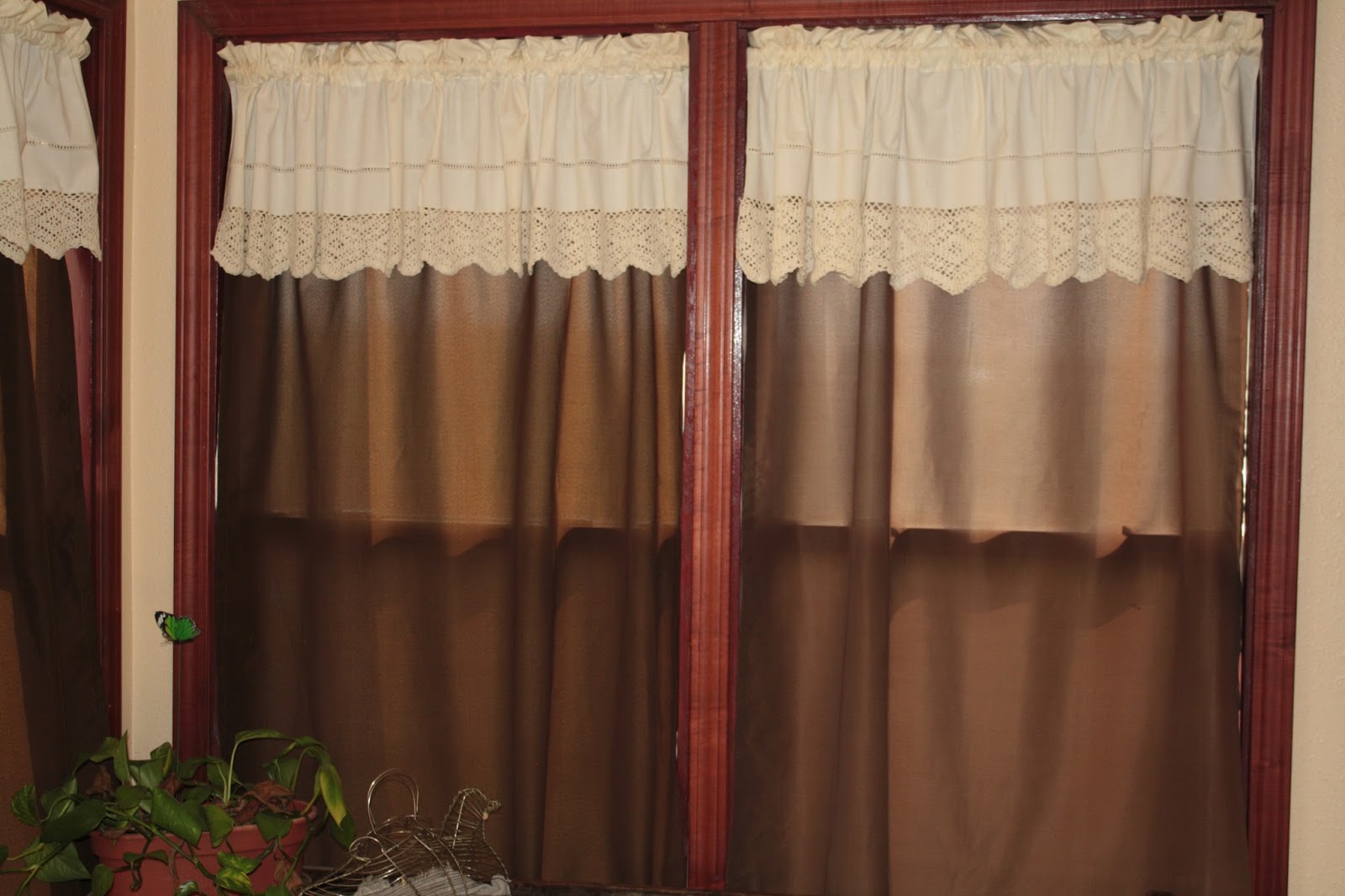
During the summer months we are greeted with stunning sunrises and lots of warm, no HOT, sunshine streaming in through the east and south facing windows.  By 10:30 AM our home will heat up by more than 20 degrees if we don't close the windows and pull the shades by 8:30 AM.  I absolutely refuse to use an air conditioner in this climate.  Although not lined with thermal insulation, the dark shades in the above photo block a tremendous amount of heat during the summer months.   One of this winter's projects is to add thermal insulation to the backs of our window shades so they will be even more effective at reducing the heat next summer.


Consequently, just as the leaves begin changing color our nighttime temperatures drop to the mid 40's and our daytime temperatures also cool down to the mid 60's.  This is my signal that it's time to remove the window shades and allow the sunshine to heat up our home.  I make sure to use my window cleaner regularly during the winter months because clean windows allow for the most heat exchange.  By allowing our home to warm up to the upper 70's during the day, the interior of our home will stay warm, above 65 degrees, at night.  Thus, we will not have to turn our heat on for another 6 + weeks.

We are fortunate the previous owner installed doubled pane windows in the living portion of the house during a remodel.   Our basement windows are still the old originals but we have plans to upgrade those to triple pane next summer.  Another insulating tool that blocks the heat as well as the cold is the ever so inexpensive tube of caulk.  By caulking your window casings (be careful to avoid the slide portion that allows the window to open and close) and the wood trim around your window casings, you will create a barrier that keeps cooler air inside during the summer and cold air out during the winter.  If a home does not have double or triple pane windows, I believe caulking single pane windows is imperative to lowering energy costs.

If your energy bills have been rising as quickly as ours, I encourage you to examine the placement of your home's windows and utilize shades in the warmest areas during the summer months to aid in keeping your home cooler.  Likewise, remove the majority of window coverings from the sunniest parts of your home during the winter months so you may utilize the natural warming power of the sun.

Do you utilize the natural power of passive solar heating in your home?  Do you have any additional tips that could benefit me or others?


Thursday, September 17, 2015

Quilts and Salt

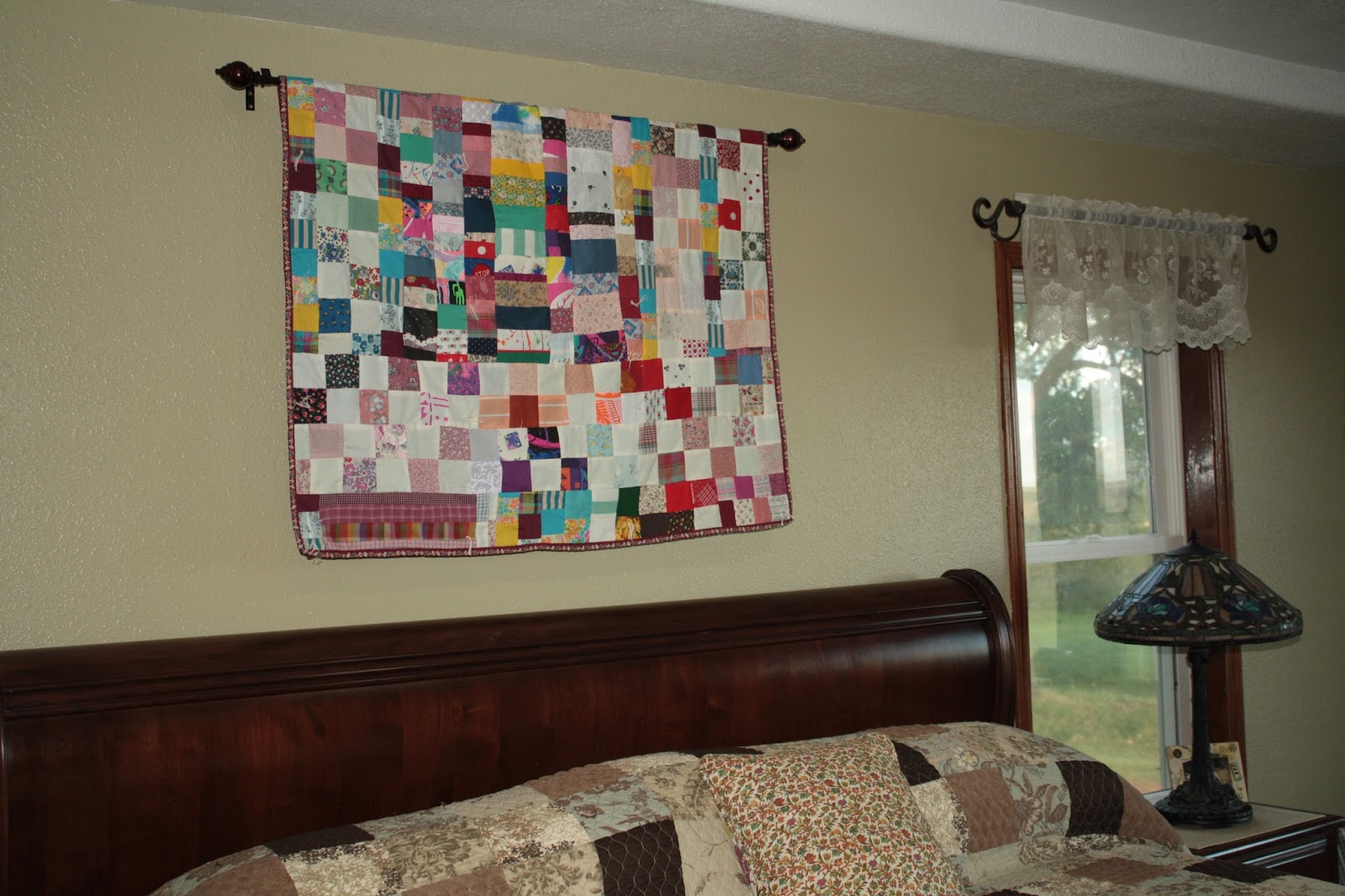
I like quilts.  I like quilting books and magazines.  I like blogs about quilts.  I like quilt shops.  The quilt exhibit at any county fair is always my favorite exhibit.  My favorite decor is primitive early American folk art design, which, of course, contains lots of vintage and antique quilts as furniture covers, wall hangings, bed coverings, cabinet displays, etc.  So, as I perused the local re-sale shop in town earlier this week, I was delighted to find a colorful mosaic crib sized quilt done in small squares combined with vertical and horizontal strips in perfect condition for only $3.  Truth be told I felt a twinge of guilt as I chose to place it in my basket.  Because I am an occasional novice quilter, I am fully aware of how much time and work goes into any quilting project regardless of pattern or size. Any homemade quilt is worth far more than $3.
No, I don't need a cribbed sized quilt.  Yes, it was an impulse purchase made without any plan or intention.


After leaving the re-sale shop, I needed to stop in the Tractor Supply, the Wal-mart of country folks.  While there I glanced at the book rack and a magazine caught my eye.  I picked up the latest copy of "Primitive Design" and took several moments gleefully admiring the photos of primitive early American folk art decor.  As I flipped through the pages I became enlightened as to why I couldn't resist the impulse purchase of that $3 quilt.  It was the perfect wall hanging for the master bedroom.  I have been struggling with decor choices in this big farm house ever since we moved in 4 years ago.  Since we enjoy hosting guests in our home, a warm and inviting atmosphere is something I desire to create, but lack the natural talent.  For quite some time I've been praying and asking the Lord to expand my creativity in the arena of home decor.  I feel blessed that this little quilt, aka wall hanging, is an answer to that prayer.  It gave me confidence that our Lord will continue to expand that creative aspect I desire.

All the small, insignificant pieces of fabric, in decades past they were scraps from other sewing projects, pieced together into something useful and beautiful is why I enjoy quilts so very much.  To me, quilts reflect the tapestry of mankind.  All colors, all shapes, all sizes, all designs; some pretty, some plain, some bold, some subtle - every singular piece an individual representation of a person.  On their own these tiny scraps of fabric are not useful.  However, when joined together by an artisan, an exquisite and serviceable work of art comes to life.  Similarly, the average individual doesn't accomplish great things.  However, when we let the Master Artist, use us for His purposes and plans, He joins us together with other individuals, like tiny quilt pieces, and wonderful and purposeful things happen.  Quilts remind me of this.


Earlier today, I read THIS article about a fellow who decided to see what it really takes to make a chicken sandwich.  He raised his own chicken, planted wheat for the bread, and cucumbers for the pickles, etc. He even traveled to the sea to harvest salt water that he had to dehydrate for the salt so he could season his sandwich.  The article states that it took him six months and cost him around $1,500 to create this chicken sandwich.  The point of his adventure was to point out to the average American how much we take for granted.  On our own, preparing a chicken sandwich is a monumental task.  But when joined within a community of others, such as farmers, bakers, livestock producers, wholesalers, grocers, etc., a chicken sandwich is a quick and satisfying lunch.  Just like quilt pieces, separately these individuals don't supply a finished product, but when pieced together they have purpose and functionality.

However, the article sparked something else inside me.  When I was reading about this man's adventure to harvest salt, I thought of the Bible passages that tell Christians to be salt and light to a lost and dying world.  I have found that most sermons and writings on this subject focus on the seasoning aspect of salt and likewise, Christians are to strive to be a delicate balance of seasoning in this world.  Not too strong in flavor or fervor as to be spit out or spurred away, but certainly not so sparse and meek that we are dull and unflavored, thus, failing to accomplish the command of going to all the nations and recruiting the lost and dying for Christ's cause.

This article reminded me how very valuable salt has been throughout the ages. Salt is not just a seasoning.  For centuries it has been used, along with smoke, vinegar and sugar, as a food preservative.  Without it many peoples and entire communities would die due to starvation during long journeys or winter months when food was sparse.  Our children have studied in history that at one time salt was so valuable it was used as currency, equal to gold, and there were wars over salt, aka the Salt Wars.  As I pondered this, I realized that Christians are not to be only a sprinkling of flavoring among the lost and dying of this world.  But we are exceptionally valuable to the Lord  because we are His representatives called to preserve His righteousness.  So, next time you read or hear about your mission to be salt and light unto a dark and dying world, please consider that God not only commands one to season this world with His Good News of Jesus Christ, but He also directs us to uphold and preserve His righteous standard detailed in His Holy Word, the Holy Bible.

Monday, September 14, 2015

The Coveted Kelly Green Blazer

As noted in my previous post, we had a very busy summer filled with family, friends, hard work and a few sprinklings of fun, and accomplishments.  However, there is one accomplishment that I thought needed its own post.

The accomplishment of earning a 4-H Kelly Green Blazer.  


Songbird, second from left

Do you know what it means?  Do you know why that is such an accomplishment?  

Yes! Songbird applied for one of the five 4-H State Ambassador positions - and got it!

Her duties as a State Ambassador began in early August with visits to some of eastern Montana's county fairs, a radio interview and a planning meeting in Bozeman.  The 2015-16 year will be busy for her as she and her teammates plan state events, workshops, 4-H congress, and become the faces of Montana's 2015-16 4-H program as they meet with businesses, youth, legislators, philanthropic citizens, and others across the state of Montana.

As a home educator, I am also proud that Songbird is one of TWO home schooled students on the 2015-16 State Ambassador team.   - Go Home School!