Monday, September 21, 2015

Passive Solar Heating

Regardless of published government statistics, the average middle-class American KNOWS that inflation is much higher than our news media reports.  Some folks have been keeping track of real world cost increases vs income for quite sometime and have reports as high as a 45% "real world" inflation rate since 2008.  I'm not sure how scientific these reports are, but regardless of the exact figures, literally every person I know lives and struggles with the daily effects of steep inflation, despite the lies the U.S. government publicizes.

I can personally attest to a 7% increase in our household utility costs and property taxes in just the past 4 years!  And, of course, like most American families, our income has remained stagnant.

The majority of our home has windows on the east and south sides.  Fortunately, we have only two windows and one set of French doors on the north side  and again two windows and another set of French doors on the west (the sides that take most of the bitter 25 mph winter winds).  The Jablonski family who originally built this home nearly 100 years ago, knew a little something about passive solar heating, although it didn't have such a fancy name back then.  They used their common sense to take the most advantage of the warm sunshine and block as much of the bitter winds as possible during the harsh winters. 


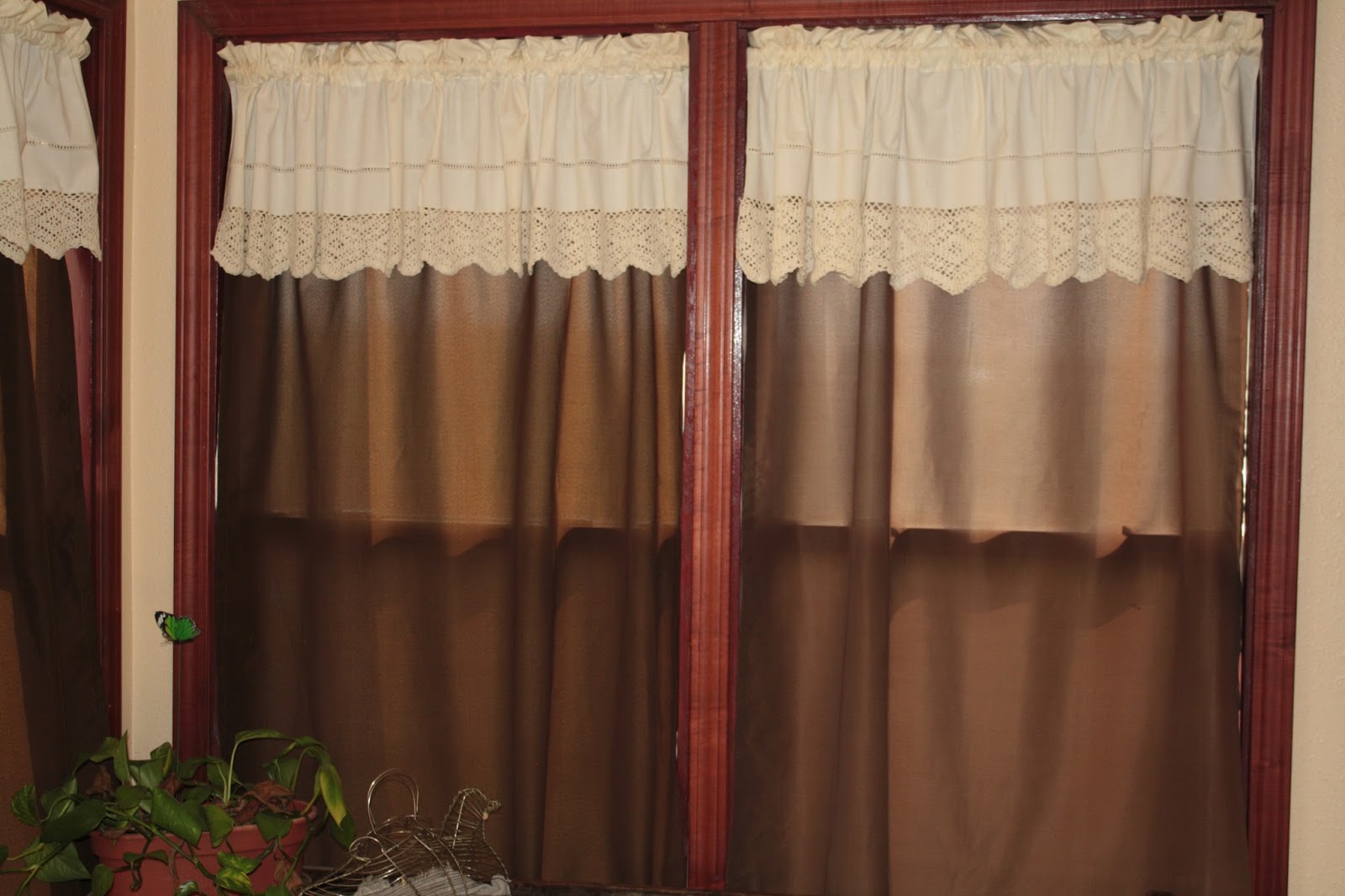
During the summer months we are greeted with stunning sunrises and lots of warm, no HOT, sunshine streaming in through the east and south facing windows.  By 10:30 AM our home will heat up by more than 20 degrees if we don't close the windows and pull the shades by 8:30 AM.  I absolutely refuse to use an air conditioner in this climate.  Although not lined with thermal insulation, the dark shades in the above photo block a tremendous amount of heat during the summer months.   One of this winter's projects is to add thermal insulation to the backs of our window shades so they will be even more effective at reducing the heat next summer.


Consequently, just as the leaves begin changing color our nighttime temperatures drop to the mid 40's and our daytime temperatures also cool down to the mid 60's.  This is my signal that it's time to remove the window shades and allow the sunshine to heat up our home.  I make sure to use my window cleaner regularly during the winter months because clean windows allow for the most heat exchange.  By allowing our home to warm up to the upper 70's during the day, the interior of our home will stay warm, above 65 degrees, at night.  Thus, we will not have to turn our heat on for another 6 + weeks.

We are fortunate the previous owner installed doubled pane windows in the living portion of the house during a remodel.   Our basement windows are still the old originals but we have plans to upgrade those to triple pane next summer.  Another insulating tool that blocks the heat as well as the cold is the ever so inexpensive tube of caulk.  By caulking your window casings (be careful to avoid the slide portion that allows the window to open and close) and the wood trim around your window casings, you will create a barrier that keeps cooler air inside during the summer and cold air out during the winter.  If a home does not have double or triple pane windows, I believe caulking single pane windows is imperative to lowering energy costs.

If your energy bills have been rising as quickly as ours, I encourage you to examine the placement of your home's windows and utilize shades in the warmest areas during the summer months to aid in keeping your home cooler.  Likewise, remove the majority of window coverings from the sunniest parts of your home during the winter months so you may utilize the natural warming power of the sun.

Do you utilize the natural power of passive solar heating in your home?  Do you have any additional tips that could benefit me or others?


Thursday, September 17, 2015

Quilts and Salt

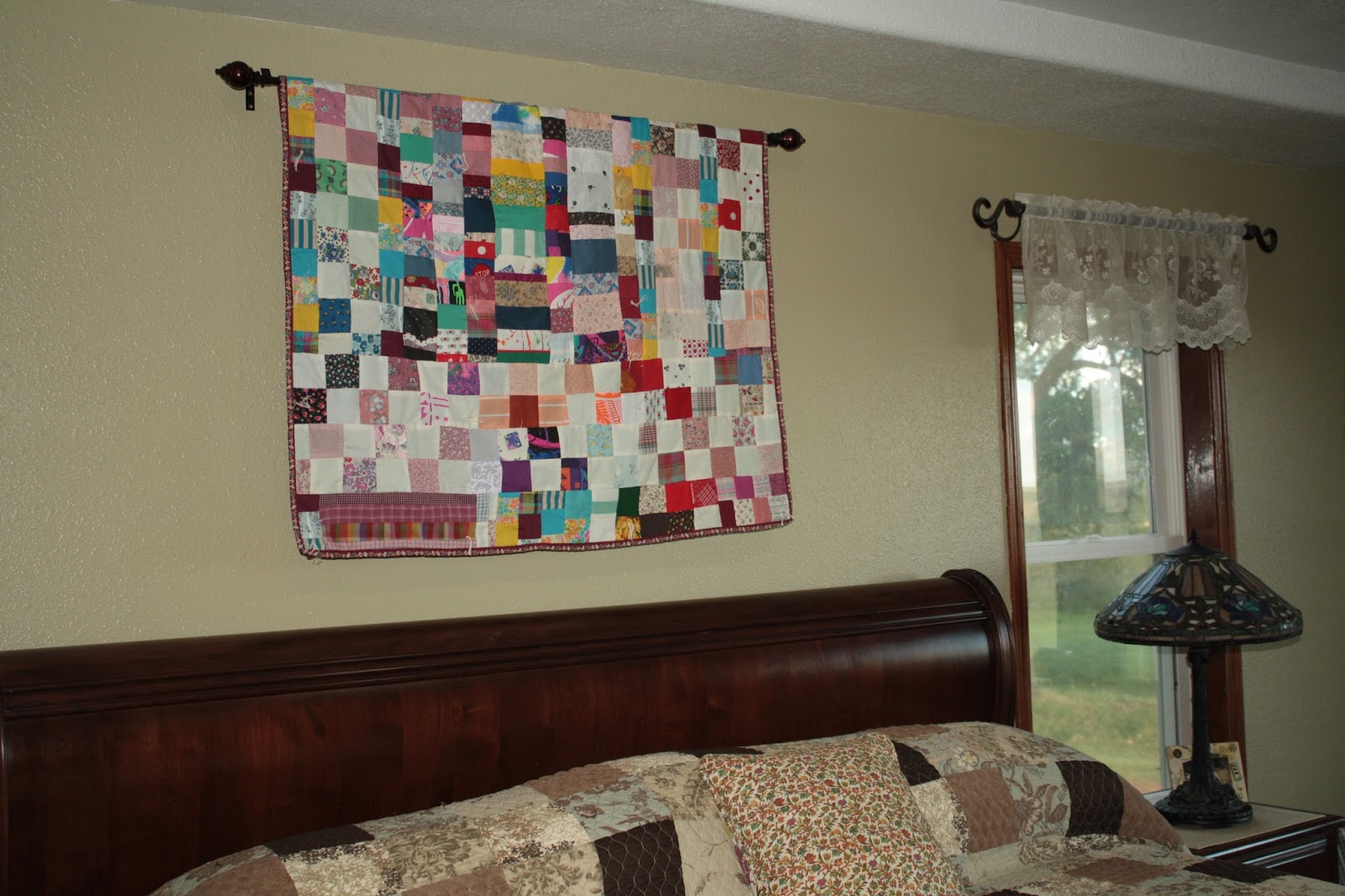
I like quilts.  I like quilting books and magazines.  I like blogs about quilts.  I like quilt shops.  The quilt exhibit at any county fair is always my favorite exhibit.  My favorite decor is primitive early American folk art design, which, of course, contains lots of vintage and antique quilts as furniture covers, wall hangings, bed coverings, cabinet displays, etc.  So, as I perused the local re-sale shop in town earlier this week, I was delighted to find a colorful mosaic crib sized quilt done in small squares combined with vertical and horizontal strips in perfect condition for only $3.  Truth be told I felt a twinge of guilt as I chose to place it in my basket.  Because I am an occasional novice quilter, I am fully aware of how much time and work goes into any quilting project regardless of pattern or size. Any homemade quilt is worth far more than $3.
No, I don't need a cribbed sized quilt.  Yes, it was an impulse purchase made without any plan or intention.


After leaving the re-sale shop, I needed to stop in the Tractor Supply, the Wal-mart of country folks.  While there I glanced at the book rack and a magazine caught my eye.  I picked up the latest copy of "Primitive Design" and took several moments gleefully admiring the photos of primitive early American folk art decor.  As I flipped through the pages I became enlightened as to why I couldn't resist the impulse purchase of that $3 quilt.  It was the perfect wall hanging for the master bedroom.  I have been struggling with decor choices in this big farm house ever since we moved in 4 years ago.  Since we enjoy hosting guests in our home, a warm and inviting atmosphere is something I desire to create, but lack the natural talent.  For quite some time I've been praying and asking the Lord to expand my creativity in the arena of home decor.  I feel blessed that this little quilt, aka wall hanging, is an answer to that prayer.  It gave me confidence that our Lord will continue to expand that creative aspect I desire.

All the small, insignificant pieces of fabric, in decades past they were scraps from other sewing projects, pieced together into something useful and beautiful is why I enjoy quilts so very much.  To me, quilts reflect the tapestry of mankind.  All colors, all shapes, all sizes, all designs; some pretty, some plain, some bold, some subtle - every singular piece an individual representation of a person.  On their own these tiny scraps of fabric are not useful.  However, when joined together by an artisan, an exquisite and serviceable work of art comes to life.  Similarly, the average individual doesn't accomplish great things.  However, when we let the Master Artist, use us for His purposes and plans, He joins us together with other individuals, like tiny quilt pieces, and wonderful and purposeful things happen.  Quilts remind me of this.


Earlier today, I read THIS article about a fellow who decided to see what it really takes to make a chicken sandwich.  He raised his own chicken, planted wheat for the bread, and cucumbers for the pickles, etc. He even traveled to the sea to harvest salt water that he had to dehydrate for the salt so he could season his sandwich.  The article states that it took him six months and cost him around $1,500 to create this chicken sandwich.  The point of his adventure was to point out to the average American how much we take for granted.  On our own, preparing a chicken sandwich is a monumental task.  But when joined within a community of others, such as farmers, bakers, livestock producers, wholesalers, grocers, etc., a chicken sandwich is a quick and satisfying lunch.  Just like quilt pieces, separately these individuals don't supply a finished product, but when pieced together they have purpose and functionality.

However, the article sparked something else inside me.  When I was reading about this man's adventure to harvest salt, I thought of the Bible passages that tell Christians to be salt and light to a lost and dying world.  I have found that most sermons and writings on this subject focus on the seasoning aspect of salt and likewise, Christians are to strive to be a delicate balance of seasoning in this world.  Not too strong in flavor or fervor as to be spit out or spurred away, but certainly not so sparse and meek that we are dull and unflavored, thus, failing to accomplish the command of going to all the nations and recruiting the lost and dying for Christ's cause.

This article reminded me how very valuable salt has been throughout the ages. Salt is not just a seasoning.  For centuries it has been used, along with smoke, vinegar and sugar, as a food preservative.  Without it many peoples and entire communities would die due to starvation during long journeys or winter months when food was sparse.  Our children have studied in history that at one time salt was so valuable it was used as currency, equal to gold, and there were wars over salt, aka the Salt Wars.  As I pondered this, I realized that Christians are not to be only a sprinkling of flavoring among the lost and dying of this world.  But we are exceptionally valuable to the Lord  because we are His representatives called to preserve His righteousness.  So, next time you read or hear about your mission to be salt and light unto a dark and dying world, please consider that God not only commands one to season this world with His Good News of Jesus Christ, but He also directs us to uphold and preserve His righteous standard detailed in His Holy Word, the Holy Bible.

Monday, September 14, 2015

The Coveted Kelly Green Blazer

As noted in my previous post, we had a very busy summer filled with family, friends, hard work and a few sprinklings of fun, and accomplishments.  However, there is one accomplishment that I thought needed its own post.

The accomplishment of earning a 4-H Kelly Green Blazer.  


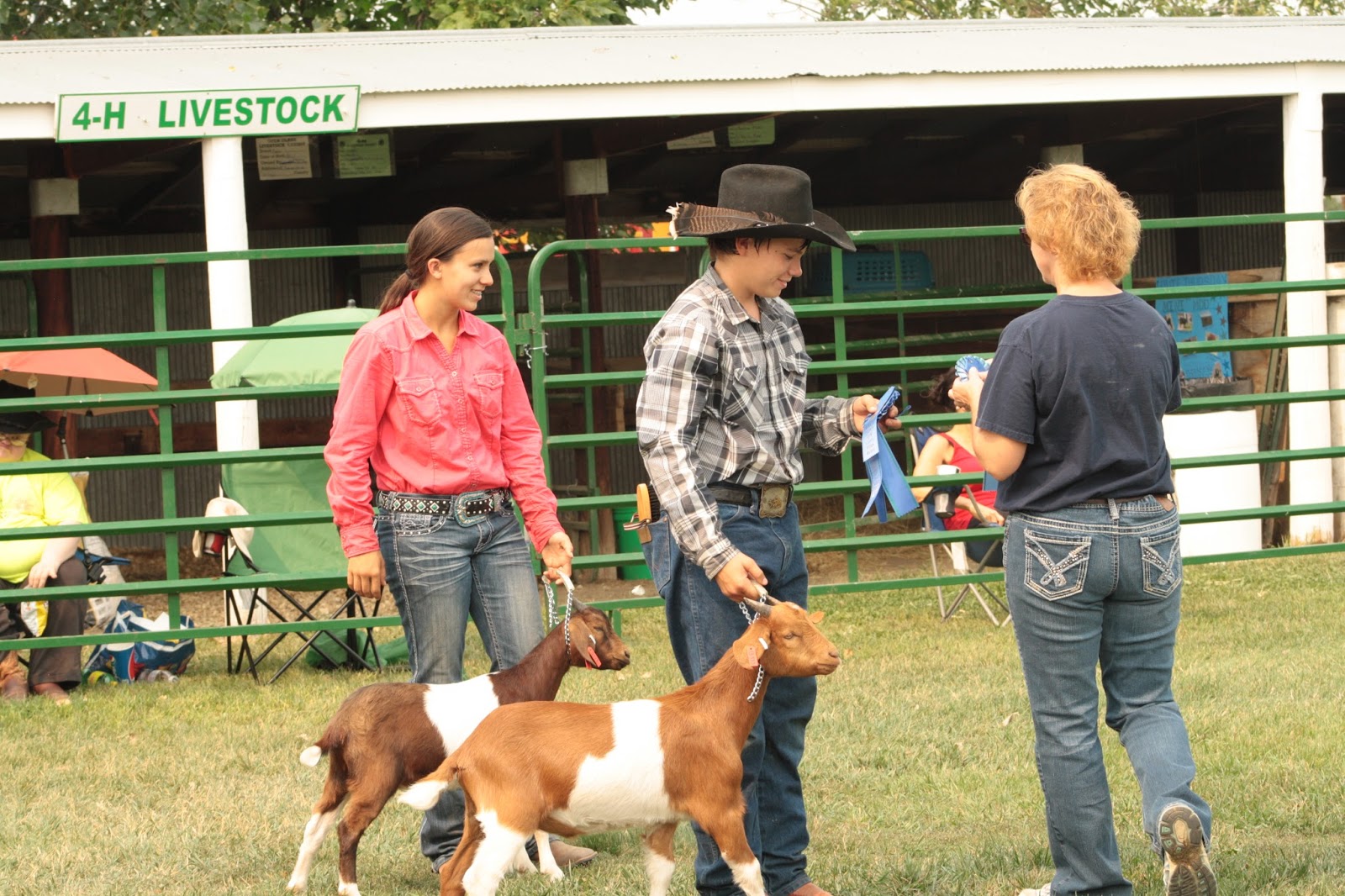
Songbird, second from left

Do you know what it means?  Do you know why that is such an accomplishment?  

Yes! Songbird applied for one of the five 4-H State Ambassador positions - and got it!

Her duties as a State Ambassador began in early August with visits to some of eastern Montana's county fairs, a radio interview and a planning meeting in Bozeman.  The 2015-16 year will be busy for her as she and her teammates plan state events, workshops, 4-H congress, and become the faces of Montana's 2015-16 4-H program as they meet with businesses, youth, legislators, philanthropic citizens, and others across the state of Montana.

As a home educator, I am also proud that Songbird is one of TWO home schooled students on the 2015-16 State Ambassador team.   - Go Home School! 

Wednesday, September 9, 2015

Family, Friends, Brandings, Roundups, Scenic Views, Rodeos and County Fair

Regardless of any troubles one may have, life continues to happen.  Most folks envision the country life as one of leisure; sitting on the front porch watching the sun set while sipping a tall glass of sweet tea or meandering through the days without the need to watch a clock.  The reality of country living is that we are often more busy than our urban counter parts, especially during the good weathered summer months.  This summer has proven to be as busy as ones in the past. As if growing, maintaining and putting by a 5,700 sq. ft. garden, caring for livestock, lots of very dirty laundry, and the sweeping of floors 7 times per day wasn't enough, we kept ourselves occupied with the following.

A late spring / early summer branding:


First step is to rope the calves by the hind legs  (Farmer Boy)


Second, the calves are drug to the fire


Third the calves are wrestled down and held while ...  (Mr.B & Songbird)


... they are tagged, branded, cut (bull calves only), and inoculated.
They are then released back to their mamas.  (Mr.B & Farmer Boy)

Our family friend, Miss N, and Musician and Musician's Bride came out for a visit.  While visiting we all enjoyed some of the spectacular landscapes of eastern Montana and western North Dakota.  We can't wait for everyone to come back again.

Miss N and Farmer Boy enjoying the view of Painted Canyon, North Dakota


Musician's Bride and Musician;
I'm sure their city friends would chuckle at the site of Musician in a cowboy hat
AND their attendance to a rodeo.  Most of their friends don't realize that
Musician grew up watching Mr.B team rope and me enlisting his help
with the chickens, rabbits and garden.
Yes, our Musician is a well rounded young man.


It was a real pleasure to tour Medicine Rocks, Montana with Miss N.
The weathered sandstone feels like rough sandpaper.


Rodeos are always fun for our family.
Miss N seemed to enjoy her first one and gave us all a good sporting laugh
when she asked why the cows were wearing little hats.
For any of you city folk who don't know, the steers are not wearing hats,
they are wearing horn wraps which protect them against rope burns and
broken horns during roping events.


Ever hear the phrase "Ride'em Cowboy!"
It is derived from saddle bronc, bare back and bull riding rodeo events.

We rounded up and worked our goat heard while Musician and Musician's Bride were visiting.  Having extra hands made the work go fast.


Farmer Boy, Songbird and Sam herding the goats up to the barn so
they can be inoculated and wormed.

We finished up our summer with County Fair.  As mentioned in previous posts, most country kids work toward and eagerly anticipate County Fair each and every year.


Farmer Boy and Songbird participated in several horse events this year.
This  was the halter class.


Farmer Boy really enjoyed the working ranch horse exercises.


Songbird took home the blue ribbon in poles and barrels at the county fair.


Although Songbird and Mini Mouse only earned a 4th place blue ribbon in the
market class for the swine project, Songbird took home the gold in showmanship 
with the Sr. Showmanship award in her swine project.

Farmer Boy's, Bob, weighed in at 343 pounds, making him significantly over finished.
Thus Farmer Boy earned a red ribbon in his market swine project.
However, with regards to the showmanship class he took home an
unprecedented 3rd place blue ribbon.  There are generally only two places,
grand and reserve, awarded in showmanship, but Farmer Boy impressed the judge
so much she handed out a 3rd place blue ribbon.


Farmer Boy had a tough time with his market lamb project this year,
 losing two lambs prior to Mr. Anderson whom he took to fair.
Since Mr. Anderson was an alternate lamb to two others,
he was born late and just barely met the weight requirements
for market class, earning Farmer Boy another red ribbon. 

This year Songbird again moved up the awards ladder in market lamb
bringing home a blue 3rd place ribbon.  She really impressed the judge
with her showmanship skills and earned Grand Champion Showmanship in sheep.


Although their goats were a little young, Farmer Boy and Songbird still earned
Grand Champion Goat and Reserve Champion Goat, respectively.  
Songbird again wowed everyone with her showmanship skills by taking
home the senior division Grand Champion Showman in goat AND
Farmer Boy's been paying close attention to his sister's showmanship skills and
accordingly took home the junior division Grand Champion Showman in goat.

Songbird was most proud of her accomplishments in her market beef project.
She earned a 4th place blue ribbon for Willie in the beef market class,
Reserve Champion in beef Showmanship and
GRAND Champion Showman in the senior division round robin.

Although I don't have photos, Farmer Boy also won Best in Show for his poultry project and GRAND Champion Showman in the junior division round robin.

Not to sound braggadocios, but when the rabbit judge for our county fair was a no show, I was asked to judge the 4-H, FFA and open class rabbit competitions.  Fortunately, I didn't know any of the contestants very well which helped curb any favoritism.  I was surprised by how much I enjoyed judging the rabbits and getting to see the pride and care our competitors placed in their projects.  We had some fine bunnies and I am now considering entering my rabbits in the open class division at next year's fair.

In addition to all of the above, thus far, I've put up 21 quarts of corn, 49 pints of zucchini & tomatoes, 57 pints of bread & butters, 60 quarts of green beans, 12 1/2 pounds of English peas (shelled), 12 quarts broccoli,6 quarts of greens, 14 jars of peach butter and 3 jars of peach jelly.  Tomatoes, carrots, peppers, beets, watermelon, cantaloupe, pumpkin and yellow squash are still in the garden and I hear them calling out to me.  So, I suppose I should get off this computer and get out there while Farmer Boy works on his reading lesson.  I hope my next post won't be three months in the making.

Thursday, June 18, 2015

A Blogging Break

I will be taking a break from the blogging world while I sort out some personal family issues.
If you happen to think of me while I'm away, I'd appreciate your prayers.
Praying the Lord abundantly blesses you and yours.
Mrs.B

Monday, May 25, 2015

Memorial Day Prayers

Although the modern Memorial Day weekend is filled with bar-b-ques, fishing trips and family gatherings, it was not implemented as a day of celebrations.  Memorial Day is a day to remember and memorialize the men and women of our armed forces who paid the ultimate price for our freedoms.

Today, I'd like to offer a prayer for the families of our nation's fallen heroes and a prayer of protection for those currently serving.
To those mourning the loss of your loved one I pray John 14: 27, "Peace I leave with you, my peace I give unto you: not as the world giveth, give I unto you.  Let not your heart be troubled, neither let it be afraid."
To those currently serving I pray Psalm 121: 7,8, "The Lord shall preserve thee from all evil: He shall preserve thy soul.  The Lord shall preserve thy going out and thy coming in from this time forth, and even for evermore."

New Life on the Homestead

So much has been happening out here on the homestead.  Our days are long and busy.  Recently, my sister-friend, Mrs.A, came up for a very over-due visit.  Although we talk on the telephone several times each week, it has been THREE long years since our last face to face visit.  I hope the highlights of her visit were enough to outweigh her cancelled return flight which left her stranded for 12 hours in a strange city ... and that was after a four hour drive to the airport!  By the time she returned home to east Texas, the poor girl was completely exhausted.
 
When one lives on a homestead there is always much to do.  Our to-do lists outweigh the number of hours in each day.  Despite conveying to my health-care professionals that I live on a farm and thus get lots of exercise, they don't seem to believe me.  They continually tell me that I need to make an exercise routine a priority and then proceed to provide me with pamphlets, web-site addresses, and such that should help me implement a routine.  My only thought to this advise is, "I work a solid 15-17 hours everyday of the week, much of that work physical labor - am I suppose to "exercise" in my sleep?"  My dear Mrs.A has an activity meter app on her smart phone.  As she worked along side me during her visit, she used that activity meter every day.  I am so glad she did, because that little gadget confirmed what I've been trying to communicate to my health-care professionals.  I am an active person.  I get lots and lots of exercise everyday.  Mrs.A works very hard at her home in Texas.  She is responsible for all the household chores, all the yard work, the pool maintenance, errands and all other home management.  She also maintains a consistent exercise routine.  She is so dedicated to her exercise routine, that she packed one of her work-out videos for use during her visit with us.  Needless to say, each and everyday was filled with so many chores and responsibilities she never had an opportunity to work-out with her videos.  However, according to her activity meter, her muscles, and sleep pattern, there wasn't a need for her work-out routine.  Her activity meter consistently recorded almost twice the activity level she achieves on a daily basis when at home.  Miles of walking to and from barns and pastures, manually lifting and hauling hay, hoeing, raking, squatting, bending, stooping, lifting, pulling, pushing, everyday for several hours each day was as much or more exercise then her trainer and workout videos instruct for a healthy lifestyle.  I must admit that she didn't get the "cardio" workout she normally would have, but that is because the goats are currently in the kidding barn.  Had we been turning them out, she'd had an opportunity to run along side them every morning and evening while they were herded to and from pasture - running, that's considered cardio, isn't it?  Thank you Mrs.A for bringing that smart phone exercise app and using it ... next month when my doctor asks me about my exercise routine - I'm going to tell him all about it.  Hey, I've a great idea ... why don't you could come up and tell him for me - we'd get another visit!  I loved having my dearest sister-friend up for a visit, I've cried everyday since she left because I miss her so much.
 
May is the month of newborn farm animals on our homestead.  Only days before Mrs.A's arrival, we found our first set of twin kids in the pasture.  Since then all the goats have been sequestered in the kidding barn and in the past two weeks we've added 13 more kids to our herd, 8 bucklings, 7 dolings.
 
Mama and twins (bucking and doling) less than an hour old.

Using a sled to transport the kids and coax mama to the barn.


Here's a close up of the still wet twins.

This is TC.  Although she was a twin, she was the runt.
She was so small and weak that Mrs.A and I had to hold her
up so she could reach mama's teat.  Within days she was strong
enough to feed herself.  We are happy to see her growing
so fast.

This little colt was born 5 days ago.  We've yet to decide on a barn name. 
Farmer Boy likes the name Gator ... Do you have any suggestions?
Farmer Boy hatched a few eggs again this spring.  11 of the 13 have survived
and are now big enough to be integrated into our mature flock.


Bob, Richard and Mini Mouse are growing.  We built a free field shelter
 for them out of extra tee-posts, pallets, and scrap plywood.  Beautiful
outbuildings and pretty landscaping are important to humans - not livestock.
Besides plenty of feed and clean water, the animals just want a clean and
dry place that keeps them safe from predators.


I know many of my readers are animal lovers.
If you think of it, please pray for our beautiful palomino mare, Blondie.  After
exercising her yesterday, Farmer Boy turned her back out to pasture.  At feeding
time we noticed her limping on her front left leg/hoof.  After examination, we
did not see any swelling or cuts and abrasions, nor feel any fever.  She does not
indicate pain when pressing on or moving her leg, shoulder or hoof.  However, she is
 in obvious pain when she tries to stand on it.  Yesterday evening was rainy and we
suspect she may have slipped on wet grass or in mud and possibly pulled a
 muscle or tendon.  Farmer Boy is very upset about her injury.
 Please pray she heals up quickly.


Monday, May 4, 2015

The $29.00 Food Stamp Challenge

I'm sure many have seen the articles circulating about how the rich and famous are challenging each other to eat for an entire week on just $29 per person per week - the average benefit allotted to SNAP (Supplemental Nutrition Assistance Program) recipients.  So far, I think the rich and famous are failing miserably.

The thoughts and comments of the general public regarding the rich & famous' "$29 Food Stamp Challenge" seem to range from excessive self pity by some receiving SNAP benefits to mean & hateful attitudes by some paying taxes to support SNAP and everything imaginable in between.  After reading a few comments regarding these articles, I again found myself very grateful to have grown up poor and without government assistance.  Because of a lack of finances, I learned through the everyday lifestyle of my family how to be resourceful, how to make a dollar last, how to stretch the food in the pantry, and make do with everything else.

Being from the south we eat southern cuisine.  Being country folks we eat country cuisine.  Southern and country cuisines are generally cooked from scratch using readily available basic ingredients and are usually very economical.  Until last year, I fed our family for an average of $21.00 per week per person.  Because of last year's garden and livestock, our current grocery bill has been reduced to less than $12 per week per person.  We have always kept our grocery budget well below the national average SNAP benefit, currently $29 per person per week.

Through the children's 4-H club we've also volunteered at our town's local food bank.  There are some startling facts concerning food resources for the poor that I've learned from volunteering at the local food bank.  I'm going to share these cold hard facts.  Just like the comment section from the various news articles covering this topic, this information may bring about feelings of anger, sympathy, self-pity, etc. from some folks reading my blog.  All I ask is that all comments, whether good, bad or indifferent, be kept polite and tactful.

There are four basic categories of clients that enter our local food bank. 

1.  The low-income (aka, the working poor), who make too much to qualify for benefits but significantly less than the national household average of $51,939 annually.  For a family of four, $31,008 annually is the cut off point for SNAP benefits.

2.  The underfunded senior citizen.  Generally, these folks have worked a lifetime, many beginning their working lives as young as age 12, paid a lifetime of taxes and attempted to live a quiet, peaceful and responsible life.  Unfortunately they did not, or could not, adequately save enough to support the high cost of medical care they find themselves currently subject to.  The majority of their social security and retirement incomes are eaten up by large medical costs.

3.  The part-time low wage earner who qualifies for SNAP benefits.  Although these folks work, many don't seem especially motivated to further their education, work experience or seek full-time employment.

4.  The multi-generational, unemployed, full-time welfare recipient.  Sadly, these folks have accepted welfare poverty as the best they can, or want, to achieve from life.

I'll begin a description of my personal experiences from my town's local food bank with the disparity of the first category, the working poor.  Remember, the working poor are those families who earn one cent or more over the maximum eligibility requirements for SNAP. (a family of 4: $31,008).  These families do not qualify for SNAP, free breakfasts & lunches through the public school system, WIC, or government commodities from the local food bank. 

(Oh! here's where I should probably explain the government commodity aspect of the food bank.  Government commodities are food stuffs donated to the food bank by the US Department of Agriculture.  Each month a semi-truck from the USDA full of everything imaginable arrives at our food bank. About 1/3 of the trailer is unloaded and, literally, packed into our tiny food bank.   It delivers frozen meats, canned fruits and vegetables, boxes of cereals, dairy products, packages of flavored pasta and rice mixes, etc.  Federal law prevents non-SNAP clients from receiving government commodities.)

I am known for attempting to educate others on maintaining a reasonable grocery bill.  And thus, I'll remind all that many popular financial advisors such as Suzy Orman, Dave Ramsy, Larry Burkett, suggest a family spends no more than 13% of their annual income on food.  With that in mind:

**A working poor family of 4 earning $31,008.01 annually (1 cent more than the maximum income allowed for SNAP benefits), should not spend more than $4,031 annually OR $335.92 monthly OR $77.51 weekly or $19.38 per week per person for groceries.  A reasonable grocery budget for these non-qualifying families is only 66% of the average SNAP benefit, showing a family of 4 must earn $46,400 annually before they can comfortably budget $29 per week per person for food.
**When a working poor family of 4, that does not qualify for SNAP benefits, arrives at our local food bank, they must go to the end of the line. Because our food bank accepts USDA commodities and private donations, federal law mandates SNAP clients with dependent children are served first.  Non-SNAP clients are served last, regardless of their situation. Federal law also prohibits non-SNAP clients from  receiving any government commodities.
**Working poor families do not qualify or receive other free food resources such as free breakfasts and lunches for children through the public school or WIC benefits for children under age 5.
**Because the SNAP clients go first and are allowed to select from the private donation area in addition to USDA commodities,  non-SNAP clients have been turned away from the food bank because the SNAP recipients gleaned all the private donations and there wasn't any food left for non-SNAP clients.

Next, I'll share how the retired senior citizen, eligible for SNAP benefits, are served:

** Because of social security & retirement incomes the average senior citizen receives only $58 per month / $686 annually in SNAP benefits.
** Although they qualify for government commodities, the USDA regulations mandate a very limited quantity and selection is donated to senior citizens.  We literally fill a box for our senior citizen clients, they do not have the option of "shopping" the commodity section of the food bank.
 **Because senior citizens do not have dependent children, obviously they do not receive free breakfasts & lunches at public schools.
**Because senior citizens do not have dependent children under the age of 5, they do not qualify for or receive WIC benefits.
** Because they do not have dependent children, the amount of government commodities they qualify for averages only $14.83 per month OR only $177.96 per year.
**Because they do not have dependent children, senior citizens are the 2nd group of clients to go through the food bank.
**Because they do not have dependent children they are limited to an estimated $10 per month maximum from the private food donation area. $120 annually.
**Every senior citizen I've served finds something in his/her commodity box that he or she does not or can not eat. They generously  donate it back to the food bank, "so the young babies won't go hungry."
**Every senior citizen I've served very carefully selects only the most needed items from the private donation area, if available.
**We've had to turn senior citizens away from the public donation area because the non-retired SNAP recipients who get to go before them didn't leave anything for the senior citizens or non-SNAP clients.
**To the best of my knowledge, at my small town's local food bank, all but two senior citizen clients whom we serve worked until age and/or health mandated retirement.

 When one adds up the retired senior citizen's benefits: SNAP $686 + government commodities $177.96 + private food bank donations, if available, $120.00 = maximum of $983.96 annually OR $81.99 per month OR $18.92 per week per person - we see they receive significantly LESS (more than 1/3 less) than the $29 per week per person challenge suggests.    From the view out my window, in addition to unaffordable healthcare costs, the second greatest challenge our nation's low income senior citizens face is hunger.

 Lastly I'll share my experiences with the last two categories, part-time low income SNAP recipients and unemployed, full-time welfare recipients.  To maintain consistency, I'll use a family size of 4 as an example:

**In my state a family of four can qualify for up to $649 per month in SNAP benefits - this amount is the maximum and is reserved for the unemployed, full-time welfare recipient.
 **My state is in line with the national average SNAP benefit for a family of four at $502.66 per month ($29 per week per person) - these households have at least one person employed at a low income level.
**A family of four must earn less than $31,008 annually to qualify for even a minimal SNAP benefit - $18 per month.
**non-retired SNAP recipients qualify for and receive free breakfasts and lunches at public schools ($744 per year per child)
**non-retired SNAP recipients with children under the age of 5 also qualify and receive WIC ($633 per year per child)
**non-retired SNAP recipients qualify and receive monthly government commodities from the local food bank (estimated at $780 per year per household)
**non-retired SNAP recipients qualify and receive privately donated foods from the local food bank (averages $810 per year per household, but can be as much as $1,000 per year per household - depending on donation levels)
**Because our local food bank accepts USDA commodities, federal law mandates that non-retired SNAP recipients with dependent children are served FIRST.

 When we add up the value of available food resources for an average low income, non-retired SNAP family of 4 (two adults, one school aged child and one child under 5) = annual SNAP benefit of $6,031.92 + school breakfasts & lunches for one child $744.00 + WIC for one child $633 + government commodities $780.00 + private food bank donations $810 = $8,998.92 annually OR $749.91 monthly OR $173.05 per week OR $43.26 per week per person, we realize that these folks receive significantly MORE than the very misleading $29 per person per week challenge circulating among our nation's rich & famous.  Please keep in mind that an, unemployed, full-time welfare family of four would receive approximately $1,756.08 per year more in SNAP benefits than the low income SNAP family portrayed in this example.

I believe in and support helping the poor.  But I also believe in honesty.  In keeping with the 13% annual food budget, a senior citizen or a family of 4 would have to earn $69,000 annually to comfortably afford the same amount of food resources available to the average non-retired SNAP eligible family of four (this commentary's categories 3 & 4).  In 2013, the average US household income was only $51,939. (2014's numbers will not be available until late 2015).  I'll provide that math for you ... 13% of $51,939 = $6,752.07 / annually OR $562.67 / monthly OR $129.85 weekly OR $32.46 per person per week- that's only $3.46 more per week than the publicized average of $29 SNAP recipient.  However, when we add all the other food resources available to SNAP recipients we find that SNAP recipients receive $43.26 per week per person - a full $10.80 MORE per week per person than the average U.S. full-time wage earner can comfortably afford.

Like it or not, those are the cold hard facts in my town. Senior citizens, the working poor and the lower middle class (those between poverty, family of four earning $31,008.01 & middle-class national average $51,939) seem to be the ones who are genuinely struggling with food insecurities.

We should also keep in mind that an April 2015 RFDTV agricultural news broadcast segment shared that while U.S. wages have remained stagnant, national food costs have seen an increase of 15% during the past 18 months.  Thus, making it even more challenging for our nation's senior citizens, working poor, and lower-middle class families to affordably purchase food.